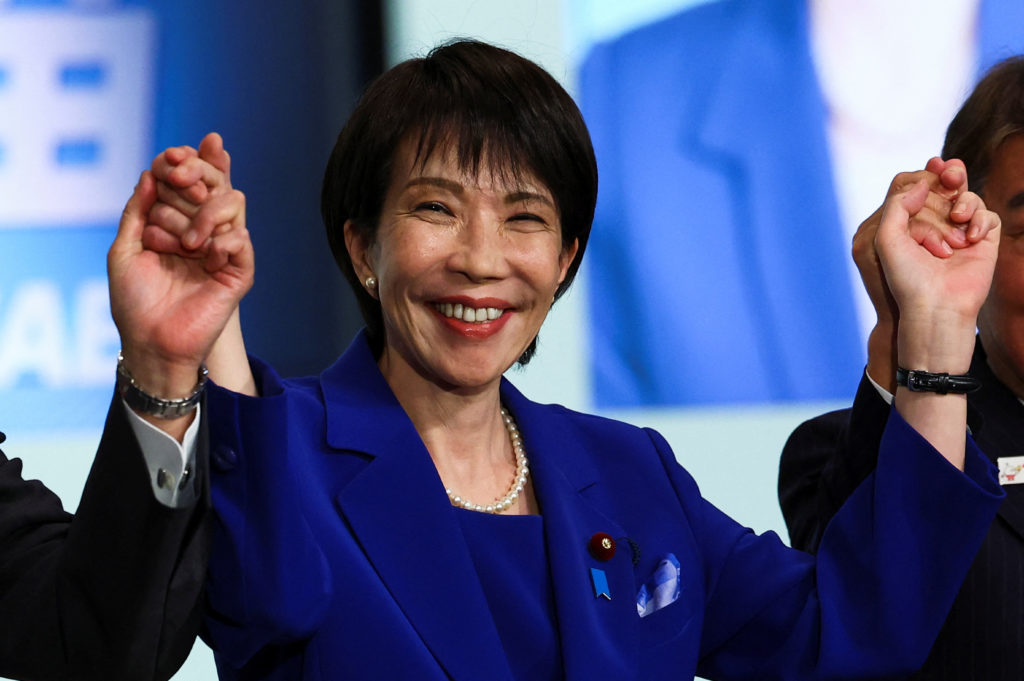
On October 21st of this year, Japan hit a new milestone in their government’s history. They recently elected their first female prime minister, Sanae Takaichi. Surprisingly, this milestone for women in Japan was achieved by the more conservative Liberal Democratic Party of Japan. Another surprising note is that she does not come from any pre-established political families; her father worked for an automotive firm. While this may not seem like a big deal for Americans, we have only had 2 really recent political families, the Bushes and the Clintons. In Japan, however, 30% of the lower house seats and 40% of the upper house are inherited seats. A large minority of seats are political dynasty seats, and a significant portion of Prime Ministers were part of political dynasties as well. Not only did Takaichi not come from a political dynasty, but she also paid for her own college, working multiple jobs and attending classes. Some say these more modest beginnings helped her appeal to Japan’s working class and not seem so distant from the populace she represented.
Takaichi’s policies are relatively straightforward with her party’s beliefs, although she is reportedly more conservative than a majority of her colleagues. Still, she does have a few more controversial opinions. Her policies on deficit spending when on defense have garnered concern that Japan may follow a similar road to its ally, the United States, and end up waist-deep in an inescapable debt. She is also in favor of preventing women from keeping their maiden name after marriage, despite her doing that exact thing in her career. Another concern is Takaichi’s consistent downplaying of Japanese aggression during the Second World War and her criticism of the war crime trials in post-war Japan. Takaichi is also critical of the tourism and immigration sectors of Japan, very much preferring to keep out foreign citizens. Jeffrey Hall, a lecturer at Kanda University of International Studies in Japan, says that she is also “[tied] into a general dislike of foreign people and also immigrants who live in the country,”. In a similar vein, NPR’s Rachel Treisman says she promoted a controversial bill, “advocat[ing] for an anti-espionage law, suggesting that Chinese residents of Japan could be potential spies for China’s government”. Another interesting policy is her general lack of feminism for a female prime minister. She does not seem particularly inclined to deal with gender inequality, while Japan is ranked 118th out of 148 countries for gender equality in pay and opportunity by the World Economic Forum. Despite this criticism, Takaichi has advocated for some of women’s rights. Strongly advocating for an expansion of hospital services for women.
In order for Takaichi to achieve this position in the party, she has had to be more conservative than her male counterparts. Some news outlets have called her “Japan’s Margaret Thatcher”. She seems to be allying herself closer with Trump, who called her a “highly respected person of great wisdom and strength” earlier in October. Takaichi later replied to the president, saying that she is “truly hoping to work together with President Trump to make our alliance even stronger & more prosperous, and to advance a Free and Open Indo-Pacific.” President Trump later visited Japan, significantly lowering tariffs on Japanese goods and Japan investing in American cars, rice, and defense weapons. Trump called this a “Very fair deal”, referring to Japan as “[an] ally at the strongest level” after his meeting on the 28th of October. This powerful alliance could become key in a possible conflict with China.
With one of the highest cabinet approval ratings since 2001 of 82%, the 7th highest approval rating of any cabinet in Japanese history, and a high rating as prime minister herself, Sanae Takaichi is considered to be quite a popular leader. Japan is a highly traditional country, and its policies tend to reflect this. One of the Prime Minister’s friends, interviewed by the New York Times, said, “I don’t think she’s an ‘iron lady,’” when referring to the nickname given by British news outlets to her political idol, Ms. Thatcher. Her friend went on to say, “Her vibe is that of a Kansai woman” implying a friendliness one would not expect from a politician in Japan.
Currently, however, some of the Japanese people have differing opinions now that her Ministry has started. Reporters from the Edsman reached out to a concerned Japanese Citizen who, at the moment, would prefer to remain anonymous. According to her, “Most of us Japanese Citizens felt betrayed. Especially with the bill she just passed about granting work to gaijins.” For those of us who aren’t Japanese, a gaijin is a non-Japanese Citizen living in Japan, often illegally. She later goes on to argue why they feel betrayed, especially since her major campaign promises were to be stricter on gaijins. Yet, she is now providing work for them while the Japanese youth can barely find a stable job. Gaijins have been causing issues for Japan for a long time, and Takaichi’s recent bills seem to miss the mark on what voters were hoping for. When asked what she is optimistic about, she said, “Optimistic? [I am] optimistic for finally reducing the number of gaijin, both living illegally and disrespecting Japan”. The disrespect of Japanese culture has been a consistent thread in the general dislike of gaijins. There are reported instances of gaijins kicking the sacred deer in parks in Japan and burning the flag of Japan for internet clout. For Americans, I would say this would be like if some minority group were spraypainting the Washington Monument. This caused mass outrage among the people of Japan. Realistically, the only concern for Japan about its prime minister is that she will become a “yes woman” for Donald Trump and America. Our source said, “I am worried about these so-called ‘close trade and relations with America’” and she goes on to state that she wants Japan to stay Japan, not become America. They are also concerned about their government spending at a deficit in regards to the JSDF(Japan Self-Defense Force), “I do not think it is necessary, especially with how America is, even given North Korea and China’s recent activities”.
Overall, the Japanese people are mildly dissatisfied with how their government has handled the situation with the gaijins, but are still hopeful that their prime minister may handle the situation. In the coming days, there is hope that there will be a resolution to the immigration issue; whether that is good or bad for Japan remains to be seen. Japan still has a major worker shortage, and the question remains whether the younger generation can fill that gap. Prime Minister Sanae Takaichi will be tested by these issues, and we will see the result of her policies in the near future. Until then, most are still hopeful she will rise to the occasion and bring peace to the land of the rising sun.