“If through excessive weakness we can neither call forth pity nor do harm to others, we attack what the universe itself represents for us. Then every good or beautiful thing is like an insult.” – Simone Weil
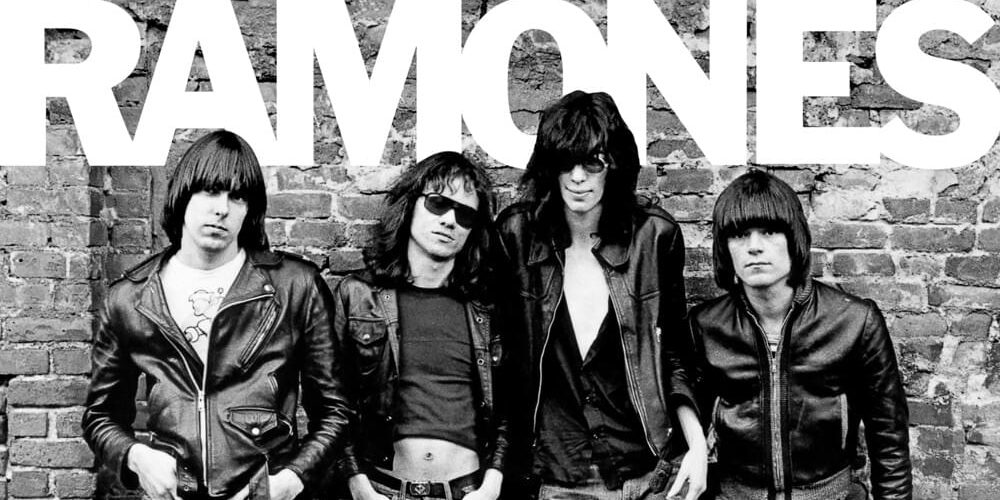
The best punk music makes other forms of rock obsolete. When you listen to “Sonic Reducer,” “Rockaway Beach,” “1970,” or any number of great punk songs, it strikes you while listening that a whole new way of life is possible. Every door is open and even the most foolish artistic endeavors can be justified. This is the excitement that punk music gives its listeners. In that moment, no other moment can proceed and no other moment came before.
This feeling, while incredibly powerful and moving, as the countless bands that were formed in the wake of the American Punk explosion of the 70s confirms, is fleeting and fragile. All punk bands die when they are unable to sustain the particular, slightly magical, slightly horrifying energy of their own momentum and youthful zeal. The attempt to create an anarchist rock utopia of complete negation always leads to the bleak reality that such a utopia is impossible, hence why many early punk rockers later became conservatives, the kind who turn to the Right’s cynicism as a defense against the failed vision of their youth.
The only cold comfort we can take from the failed attempts by many of these bands to change the face of popular culture forever is that they made some of the greatest music of the 20th century.
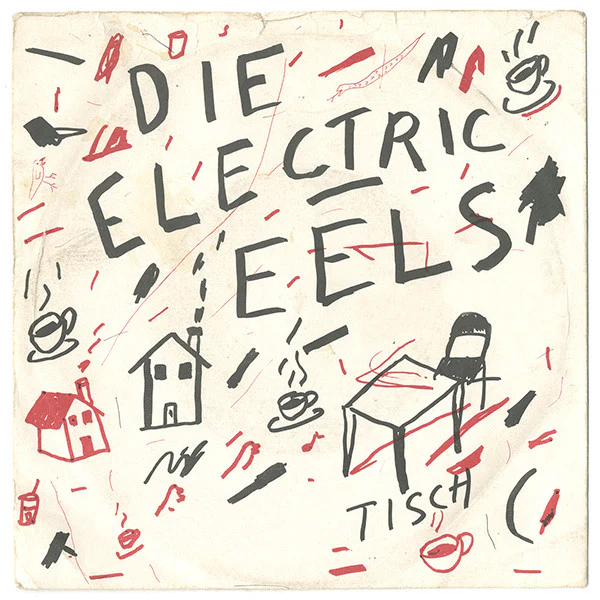
Enter the Electric Eels, who were active from 1972-1975. (Stylized in all lowercase as electric eels, an homage to e.e. cummings) Birthed out of the highly fertile, but often neglected or glossed over (much like the city itself), Cleveland underground music scene, Electric Eels were inspired to form after, upon seeing a particularly awful band open for avant garde rock legends, Captain Beefheart, a band with a record deal no less, felt that they could do much better. Inspired by the anti-blues of Beefheart, and various freeform jazz artists, although admittedly lacking in the technical know-how to accomplish much of what they listened to, Electric Eels began their assault on Cleveland, God, and civilization.
The band played a grand total of five shows. Each of the shows ended in either a riot or arrests. Singer and de-facto frontman Dave. E supposedly once wore a shirt covered in mouse traps. Other stunts included drilling holes into metal sheets, and starting up lawnmowers, both on stage. The band made frequent use of swastikas in their artwork, purely as a means of provocation and shock. Nearly every club banned them. Death threats were sent to guitarist and band founder John Morton. The band broke up, never to play again. Then their first and only single, “Agitated,” with b-side, “Cyclotron,” was released on Rough Trade Records.
This incomplete and sparse history of the band is virtually all that is known by the public at large. Anything else will likely only go on living as the memories of the band members. Likely, some of it is untrue, or embellished. But the myth still stands. Punk music has been kept alive in the public consciousness largely through its self-made myths. If the Electric Eels had not existed it would have been necessary to invent them.
The Electric Eels were, truly, anti-everything. The lyric that probably best sums up, with black humor and bitter hatred, the philosophy of the Electric Eels is, “You know what I think? I think the whole world stinks/And I don’t need no shrink, I just hate it.” The anger and negativity of punk music is robbed of its cleansing power. Other punk bands were meant to allow the listener to release their anger through the music, The Electric Eels were only interested in harming or attacking their listeners and dragging them down with them.
The ugly and deliberately confrontational nature of the music can and has been interpreted by people as a directly political statement. This is not entirely misguided. But politics have to stand for something. The Electric Eels stood for nothing. The band, like all great artists, touched on the political inadvertently, while going straight for the jugular, the eternal problems and questions of humanity that do not change regardless of their flavor of the day.
The band’s artistic philosophy is a complete negation of traditional aesthetic pleasure in music. The best comparison I can think of are the early films of John Waters. If beauty has been defined by institutions in order to lift itself up and label whatever it dislikes as ugly, such as undesired minorities, queer people (in John Waters case), or lower income communities, then what is considered ugly by institutions must really be what is beautiful. The only true ugliness in transgressive art is an appeal to tradition or authority of any kind.
This is perhaps the closest we can get to an aesthetic principle fueling the band. While John Waters used the negation of beauty standards to celebrate queerness and gayness openly in film, even if it used camp and deliberately bad taste as a Trojan horse for these ideas, the Electric Eels have nothing but hate and anger. This is not healthy, this is horrifying.
If the New York punk scene had a semi-marxist, semi-anarchist hope for the future of art, the Cleveland punk scene was defined by its hopelessness. The signature lyric and motto of the Cleveland punk was penned by their own dark Prometheus, Peter Laughner, “Ain’t it fun when you know that you’re gonna die young?” Once again, punk music was not designed for the long term. No other song quite reeks of death like, “Ain’t It Fun.” Not of dying but of death itself. Death incarnate. For this reason, I like to think that the Cleveland punks scared the New York punks and made them uncomfortable. The Electric Eels, years before anyone had even heard of the word punk, had pushed the genre to its natural conclusion. The ghost of the Electric Eels still haunts Cleveland rock musicians everywhere, even those who aren’t aware of them. Even Cleveland’s most famous contribution to the punk movement, the Dead Boys, had to leave Cleveland and go to New York in order to run from the ghost of Electric Eels. But like any great horror film, just when they thought they had gotten away, they realized they had run toward the danger instead of away from it. The song served as the band’s self fulfilling prophecy. There’s a reason it’s their last song on their last record. They had held it off as long as they could. They began wanting to be Pharaohs and ended up not even feeling someone spit in their face.
The Electric Eels are terrifying. While the band had black comedy and a carefree spirit, their anger is truly overwhelming. Nothing about the band was even remotely healthy. The image that probably best describes the goal of the band is them starting a lawn mower on stage at one of their live shows, in the process, getting themselves banned from the last venue that would allow them to play. The lawn mower was an extension of how the band used sound. Their guitars were blunt, industrial weapons, intent on making as much noise as possible. They wanted to harm people. They knew they (or more accurately their band) would die young, but they would kick and scream as loudly as they could before they could finally be dragged offstage and assimilated into a culture of false, mediocre positivity used as a shield for its immense disappointment.
By the warped, perverse and ironic measurements of the punk movement, the Electric Eels are the most successful punk band of all time. They succeeded in pissing off everyone. They sounded like shit. They did things that had never been done before by bands. They never sold out and maintained complete and total artistic control for their entire existence. And, possibly the most ironic but truthful indicator of punk success, they were a massive failure. Outside from some Cleveland weirdos, fans of the most extreme punk music, and the various bands that former members of the Electric Eels joined or founded after the band had disintegrated, they were thanked by absolutely no one. One has to wonder if perhaps the Electric Eels pissed off one too many future rock historians.
The omission of Electric Eels from the punk/proto-punk canon is a disastrous oversight. Their recordings still have enough pure punk energy to fuel one thousand lesser bands. For my money, Electric Eels were more real, genuine, immediate, impactful, disturbing and genuinely disruptive then the Sex Pistols and the New York Dolls.
What can we gain from listening to groups like the Electric Eels? We can marvel in their sheer audacity of existence, and be overwhelmed by their vision, a sign of any artistic genius, whether it is a vision of cruelty or of peace. But there is another way.
The term, “theatre of cruelty,” has been used to describe punk shows for a long time now, but not very many people know what value a theatre of cruelty allows for both creator and audience alike. Punk shows were possibly one of the last bastions of live theatre in modern society. I do wonder if there had possibly been some cleansing effect on both audience and band in these shows. Perhaps in this relatively controlled environment, seeing other people act violent, outrageous, and in ways they weren’t allowed to, let them live vicariously. If you want to go out in the street and punch the next person you see in the face and you saw someone do that very same thing on stage, they could release both their negative energy and the audiences. Art needs to be allowed to express anything, any emotion, attitude or idea. If it can’t, it has failed and must either be changed to be able to or discarded entirely, and then legitimate direct action becomes the only thing that matters. If art cannot express how you really feel, the only thing that really can is a stick of dynamite or a loaded gun.
A disquieting idea for sure, but this is one of the values of art. It allows us to heal ourselves. As Orwell said of Henry Miller’s Novel, Tropic of Cancer, in his essay, “Inside the Whale,” “Whether or not it is an expression of what people ought to feel, it probably comes somewhere near to expressing what they do feel.” One can’t hear lyrics like, “Your mouth it is a vast wasteland, you’re a little baby bore.” without having the memory of wanting to shout something similar at a teacher, boss, classmate or co-worker.
The limits of the Electric Eels are best distilled by their provocative use of the Nazi Swastika. Extreme pessimism and cynicism makes you ripe for facism. While the Electric Eels were most likely not Nazi’s and simply grabbing any symbol or sign which would draw attention their way, they were perhaps more susceptible to Nazi ideology than they and their fans would like to admit. One can imagine that the love of music saved them. A depressive world view struggles to find soil to plant itself in if we are truly thinking creatively. The Electric Eels allow us to think creatively, even at our lowest, and drive the toxic spectre of nihilism away. I can think of nothing healthier for music to accomplish.